

One of the most important historical sites in England, Battle Abbey marks where William the Conqueror fought King Harold at the Battle of Hastings in 1066. There’s so much to discover here, from walking the battlefield itself to climbing the gatehouse tower for panoramic views over 1066 country, that it makes for an incredible day out for all ages. Read on for all you need to know about visiting this expansive English Heritage site in Sussex.
Table of Contents
Arriving at Battle Abbey
Situated in the heart of Battle town, there is an English Heritage car park just a few minutes’ walk from the entrance to Battle Abbey. Parking is free for English Heritage members, and a small fee applies to non-members. You can also catch local buses, that stop right outside the Abbey, from surrounding towns. The Stagecoach 1066 route travels through Hastings, Robertsbridge, Hawkurst, Ticehurst, Wadhurst and Tunbridge Wells, while the Stagecoach 95 route passes through Ninfield, Sidley and Bexhill.
Purchasing tickets
It’s worth knowing that English Heritage offers a 20% discount on tickets purchased on the day of your visit if you arrive by public transport or bike. Simply show your bus or train ticket, or bike helmet, at reception to receive your discount. For those arriving by car, discounted tickets are also available if you purchase them in advance – simply book online any time up to midnight before the day of your visit to receive 15% off the cost of your tickets. Find current prices here.
What to see
There’s so much to explore at Battle Abbey that you’ll need a full afternoon to see all the sights. Depending on whether you take your time to stop for lunch, or choose to listen to the in-depth audioguide as you walk the battlefield, you may need the best part of a day to really see everything. Here are the highlights:
Visitor centre and ‘1066: The Battle for England’ exhibition
We recommend beginning your trip at the visitor centre, where you’ll find an exhibition with a timeline of the events leading up to the Battle of Hastings. There are interactive displays for children and adults alike to enjoy – you can pick up replicas of battle weapons to see for yourself how cumbersome it would have been to carry these into battle.
The information panels give you an insight into what life in England was like at the time of the conquest, but our favourite part was watching the short film reconstructing the events of the day. The film explains in easy-to-follow detail why William the Conqueror’s battle tactics were successful, how the landscape of the battlefield aided his victory, and how even the days leading up to the Battle of Hastings ultimately lead to his triumph over King Harold.
The Battlefield
It’s incredible to consider that you can walk on the actual site of such a historic battle – one that changed the course of the country forever. We highly recommend accepting the audioguide at the entrance desk that is included with the price of your ticket, as the guide explains in evocative detail the events that unfolded during the battle, as you make your way along the path. There is also a children’s version available.
There are two routes around the battlefield so you can tailor your visit to your ability. The shorter route takes you onto a terrace alongside the medieval undercrofts, for a view looking down over the battlefield. The longer path follows the outer edge of the battlefield before circling back up to the Abbey, where you’ll pass beautifully-crafted wooden sculptures as well as multiple viewpoints to admire the scale of the battlefield.

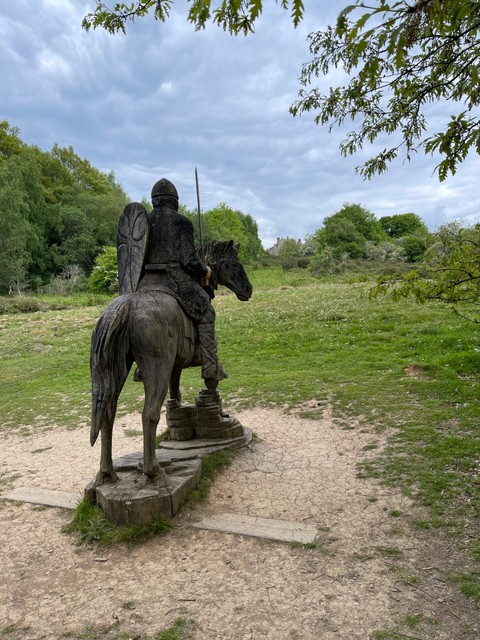
Both paths have information boards stationed at intervals along your way, and the longer route has numbers that relate to the audioguide, so you can stay on track. The shorter route, following the terrace, has a few information boards that relate to the final moments of the battle.
If you are able to, we recommend taking the longer route for a more in-depth understanding of the battlefield and how the battle was won, with evocative storytelling in the audioguide explaining the finer details of the battle. We came away with a feeling of awe and a much richer knowledge of the battle. There are also some photo opportunities along the way, where you can stand behind wooden shields and pretend you’re getting ready for battle! There are a couple of benches along the path where you can sit and admire your surroundings and rest for a while.
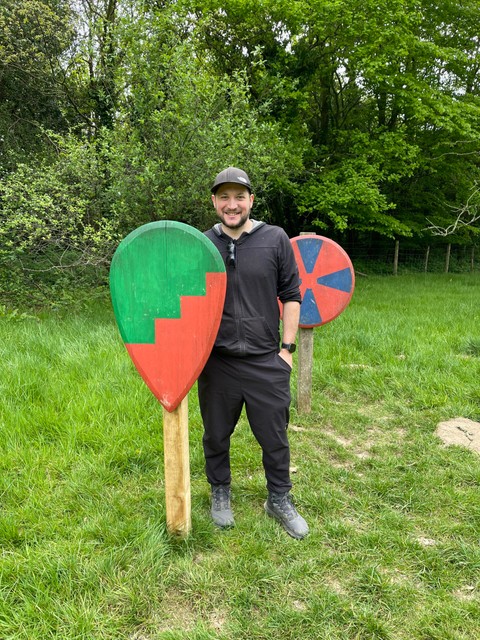
If you were to walk at a constant pace, it is possible to walk the entire outer edge of the battlefield in around 25 minutes, however this does not account for stopping to admire the surroundings or taking time to listen to the audioguide. By the time we’d walked the entire longer route, admiring the views, taking photos, and listening to the audioguide as we strolled, it had taken us around 45 minutes. As the longer route follows a changing terrain of grass and gravel paths, English Heritage recommends wearing comfortable footwear if you choose this path.

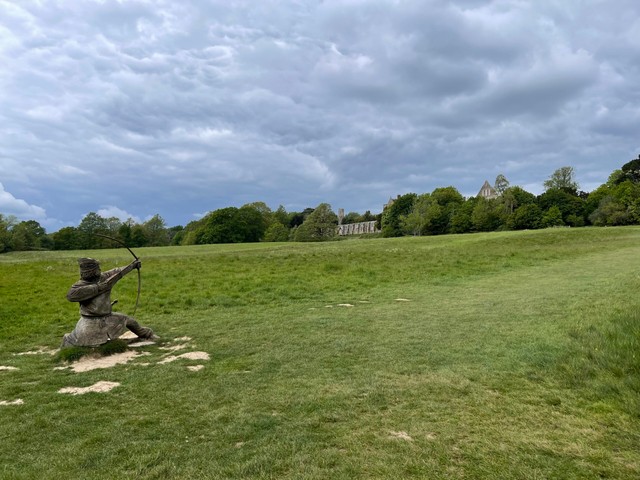
Abbey ruins
The Abbey was founded by William the Conqueror a few years after the events of the Battle of Hastings, to show gratitude for his victory and to honour the thousands of men who died in battle. The audioguide continues as you explore the Abbey ruins, continuing to provide fascinating historical insight into the buildings that remain here. It’s amazing to be able to walk around these ruins and imagine what life was like when the Abbey was in use.
Much of the church at Battle Abbey was destroyed by King Henry VIII under the dissolution of monasteries in 1538, though the outline of the church, high altar and crypt can still be seen today, as well as part of the latrine block, dormitories, and cloister that were used by the resident monks, though the cloister is now part of Battle Abbey School.
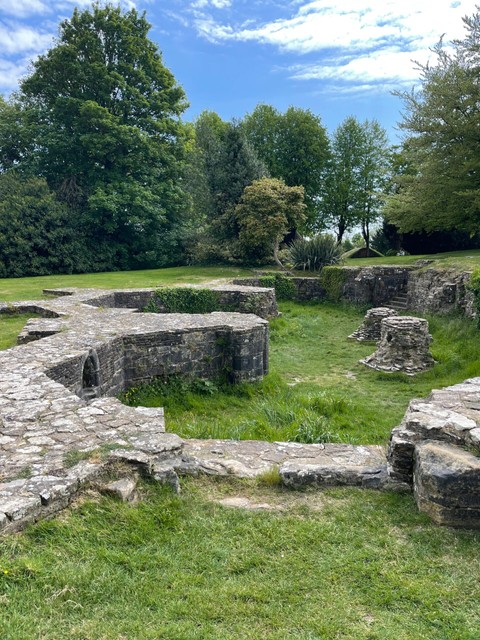
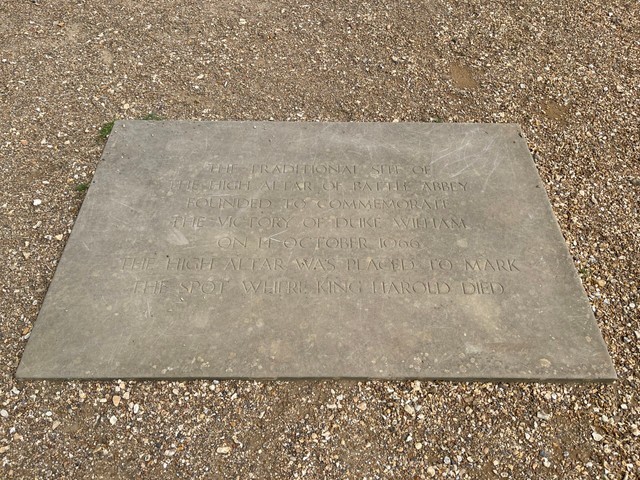
Our favourite spots here are the partially ruined dormitory building, in which you can still see where fireplaces were added to introduce a heat source in what would have been a vast sleeping area for the monks. Another is at the site of the church’s high altar, where a ceremonial stone has been laid on the spot where it’s said King Harold was killed. As you stroll amongst the ruins, you’ll see a unique example of a gothic-style thatched dairy, as well as the underground ice house – both well-preserved and another insight into medieval life.
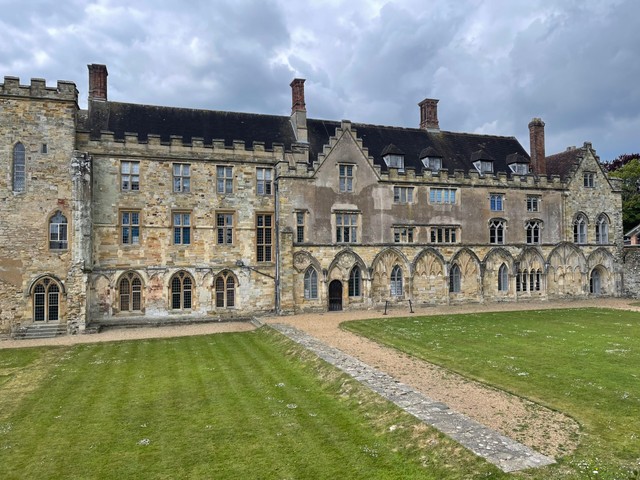
The Abbot’s Great Hall and Library have been transformed into the main buildings for Battle Abbey School. It is possible to see inside this building, though only on guided tours in the month of August. At all other times, the buildings are off limits to Battle Abbey visitors.
Walled garden
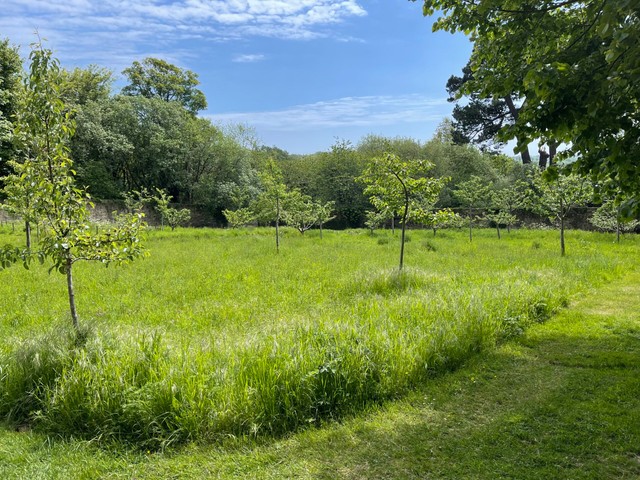
The ruins of Battle Abbey changed hands throughout the years before coming into the care of English Heritage. When the Duchess of Cleveland lived at the country house here from 1858, she created a tranquil walled garden on site to provide respite from visitors who flocked to Battle Abbey at the time. The mid-19th-century layout of the garden has been restored by the English Heritage, with carefully chosen local varieties of fruit trees and wildflower species in abundance. It’s a peaceful part of the site in which to sit and relax away from the crowds, watching bees flying between the active Victorian-style beehives that aid the ecosystem of the flourishing garden.
Battle Abbey Gatehouse
Climbing the short but steep staircases up the gatehouse tower, you’ll find an exhibition of original artefacts and recreated objects relating to life in medieval England, as well as the opportunity to learn more about stories from the Abbey in the years that followed the Battle of Hastings.
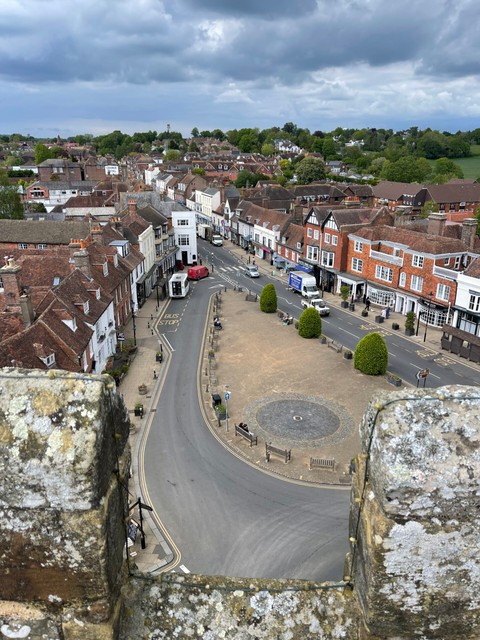
The jewel in the crown, however, is the beautiful panoramic views from the rooftop of the gatehouse. You’ll be able to take in sweeping views over the 1066 country landscape, as well as Battle town and its high street. Another of our favourite parts of the site, and the perfect way to end your day at Battle Abbey.
Facilities
At the visitor centre, you’ll find Battle Abbey Cafe where there is a plethora of light bites, afternoon tea, hot and cold dishes and drinks to fuel you for your day of exploring. There are toilets, and indoor and outdoor seating options so you can tailor your visit to the weather conditions!
Outside the cafe there is a picnic area if you prefer to pack your own snacks, next to the 1066 Battle of Hastings natural play area. The playground structures are based on 11th-century life and designed to fuel children’s imagination. With climbable barrels, carts, and an enormous wooden ox, little ones will have fun adventuring here!
Back at the entrance, there is a well-stocked gift shop selling every kind of souvenir you can think of. Whether you’re looking for a postcard to send to a friend abroad, a guidebook to learn more about Battle Abbey’s history and the events of 1066, or a replica shield or sword to entertain children, there’s a souvenir for everyone to commemorate their visit.
Tips for your visit
A few nice-to-know things to help you plan your trip to Battle Abbey:
Don’t pay full price for your tickets! If you plan your trip in advance, English Heritage offers a 15% discount on tickets purchased online. You can book your tickets up til midnight the day before your visit, so if you know when you’re going to visit it’s well worth booking in advance. If you arrive on the day without pre-purchasing, and arrive via public transport or bike, you can claim a 20% discount on tickets purchased on the day. Simply show your bus or train ticket, or bike helmet, when you arrive to receive your discount. Find current ticket prices here.
Take the free audioguide. When you arrive at reception, you’ll be asked whether you’d like an audioguide for your visit. This is already included in the price of your ticket, so it’s effectively free! This audioguide is absolutely packed with easy-to-follow details and information about the events of the Battle of Hastings, plus the creation of Battle Abbey and its subsequent history in the wake of the battle. We highly recommend this audioguide for a better understanding of what you’re seeing as you walk around the site. There is a child-friendly audioguide available for little ones, plus the guide is available in multiple languages for those whose first language is not English.
Dogs are welcome! English Heritage permits dogs at Battle Abbey, so you can bring your four-legged friends along on your day out. Dogs must be kept on lead throughout the site and it’s imperative you clean up after them. Dog water bowls are available outside the shop and the cafe, and your dogs are welcome to join you in the outdoor seating area.
Attend the annual re-enactment event. Every year, around the date that the Battle of Hastings was fought (14th October) English Heritage stages a two-day event re-enacting the 1066 battle. Visitors are able to explore army encampments and meet Saxon and Norman soldiers, have a go at activities like archery, meet falconers and their birds of prey, and peruse historical delights at the market before the battle begins. With over 500 actors taking part in the re-enactment, the event is a glorious feast for the eyes and a fun day out for all ages. Find out more and book your tickets here.
Where to stay in Battle
In and around Battle town you’re spoilt for choice with accommodation – from hotels in the town centre, to quiet cottages a short walk away from the centre. However, there are a few highly-rated choices that we recommend for your visit.
For those travelling with children, 5 Abbey View Cottages is a 4-bed self-catering cottage just a 10 minute walk from the entrance of Battle Abbey. Parking is included and dogs are welcome at the cottage – the location is perfect for countryside walks! There’s a fully equipped kitchen for easy meal preparation with little ones, plus there’s a private outdoor dining area with views over to Battle, complete with a barbecue for Summer dining with your family. Book your stay here.
The Abbey Hotel provides you with a view of Battle Abbey from your window as it’s situated on the opposite side of the road! The building is Grade II listed and the restaurant inside serves locally sourced food and ales for an authentic taste of 1066 Country. Both the hotel and restaurant are dog-friendly for those travelling with their four-legged friends. Book your stay here.
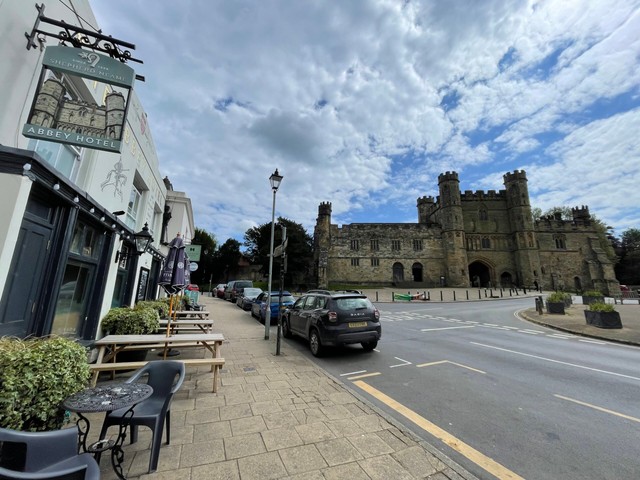
If you’re looking for self-catering accommodation, just next door is Abbey Nest – a private, one bedroom apartment with its own entrance and of course, the same stunning view of Battle Abbey just across the road. Parking is included, and there’s a fully-equipped kitchen so you can prepare your own snacks and lunches for your visit to the Abbey should you wish. Book your stay here.
We also love the Artists’ Hideaway, a stylish one bedroom home tucked away on a residential street just 8 minutes’ walk from Battle train station, and 15 minutes’ walk from Battle Abbey. For those arriving by car, there’s free parking included, and dogs are welcome to join you. The aptly named Hideaway is peaceful, beautifully furnished, with a full kitchen for self-catering so you can enjoy a cosy stay away from the town centre. Book your stay here.
See more Battle accommodation options here.
While you’re in the area
Explore Battle town
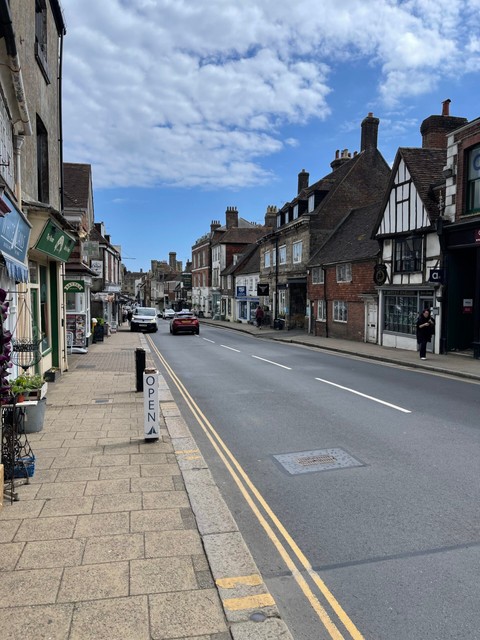
Wandering the High Street in Battle is a lovely way to end your trip to the town, which grew up around the construction of the Abbey. Heading along the street, you’ll find a plethora of shops, cafes and restaurants. One notable stop is at The Bull Inn, where a plaque outside states that the building was constructed in 1688 using stone from Battle Abbey kitchen, which was demolished in 1685.
A few doors down, the Battle Museum of Local History has a wide range of eclectic historical items. Visitors will discover dinosaur footprints, artefacts from a Roman Bathhouse, the oldest effigy of Guy Fawkes in the world, and a battle-axe believed to be the only surviving relic of the 1066 battle.
Near to the museum, situated in the centre of a roundabout, is a striking metal sculpture depicting a Norman soldier on horseback. The sculpture was installed in 2016 to commemorate the 950th anniversary of the Battle of Hastings. It’s worth a little walk up to the roundabout to admire the sculpture from a 360 degree angle.
The 1066 Country walk
For those interested in recreating the pilgrimage William the Conqueror undertook from Pevensey to Battle, the 1066 Country Walk is a public footpath spanning 50km (31 miles) through 1066 Country. There are many historical points of interest en route to enhance the walk, providing you with a true appreciation for the history beneath your feet, and we highly recommend walking the full route from Pevensey to Rye.
The route takes you over grassy hillside, through ancient woodlands, and along pavements in villages and towns, plus there’s a dedicated sculpture trail along the way with links to the history of the Battle of Hastings. Find out more on our dedicated 1066 Country Walk blog post, and search ‘1066’ on our Walks page for maps and details of the full route, or click one of the links below.


We are Chris+Suze


